
What Is Toxic Masculinity
Etymology of Toxic Masculinity
The idea of toxic masculinity has existed for decades. In the 1980’s a movement formed in the US called he mythopoetic men’s movement. The purpose of the group was to find a spiritual connection to a long lost sense of masculine identity in communal self-help workshops and retreats. Drumming, chanting and wilderness retreats (among other things) helped participants achieve this.
One core belief behind the foundations of the movement were that true masculinity had been diluted by industrialisation, modern social infrastructure, feminism and separation of fathers from family life due to work. The group’s understanding of gender and gender relations differs quite vastly to what we see now. The mythopoetic movement identified certain constants between the psychologies of men and women. They took the stance that modern society and male immaturity lead men to go in one of two directions; either becoming hyper feminised or to have adopted destructive, chauvinist and destructive behaviours.
This is where their understanding of toxic masculinity comes in.
Usage in Modern Psychology and Gender Roles
Like many words and phrases; the term has taken on new and expanded meaning, however. For instance, when we use the term toxic masculinity now, what we mean is negative behaviours commonly associated with male upbringing. Specifically, the insistence that masculinity is defined by being athletic, confrontational, assertive, dominant, promiscuous and confined to a limited emotional range. The idea that boys (and men) don’t cry or that when a young male is violent or bullies another that “boys will be boys” is an example of this. Another example is peer bullying if another male displays signs they deem as “feminine” such as compassion, understanding and support.
Misunderstanding and Controversy
The phrasing of toxic masculinity has led many to take the meaning that it is an attack on manhood. That somehow being male in itself is a poisonous or bad thing. This isn’t what it means though. The ideas that there are toxic forms of masculinity and that masculinity itself is toxic are not the same. In fact, Meryl Streep quite infamously misunderstood the term earlier this year.
The idea is actually that we promote the wrong aspects of masculinity societally as the definition of manhood. Also, that we berate for not meeting these standards. When I say ‘we’, I mean men and women. Mothers and fathers. It is a cultural thing.
In doing so, we foster bad mental health in men societally. Which leads to negative behaviour, poor self-esteem and alarming amounts of men falling victim to suicide as they fail to live up to these standards.
Personal Experiences and Views
I don’t play (or follow) sports. Frequently I find myself crying during TV shows, books, movies and games. Expressing my emotions comes very naturally, to the extent I feel depressed if I do not. I am not the traditional definition of a man.
As a child I was bullied relentlessly. My mum and nan did everything they could but the school itself took the attitude that “boys will be boys” or that I should just “man up” and confront the issue head on. I tried this a couple of times, one time it worked and one time it led to me getting hurt even more. I have a poem that sums up part of this experience quite well. he unacceptance.
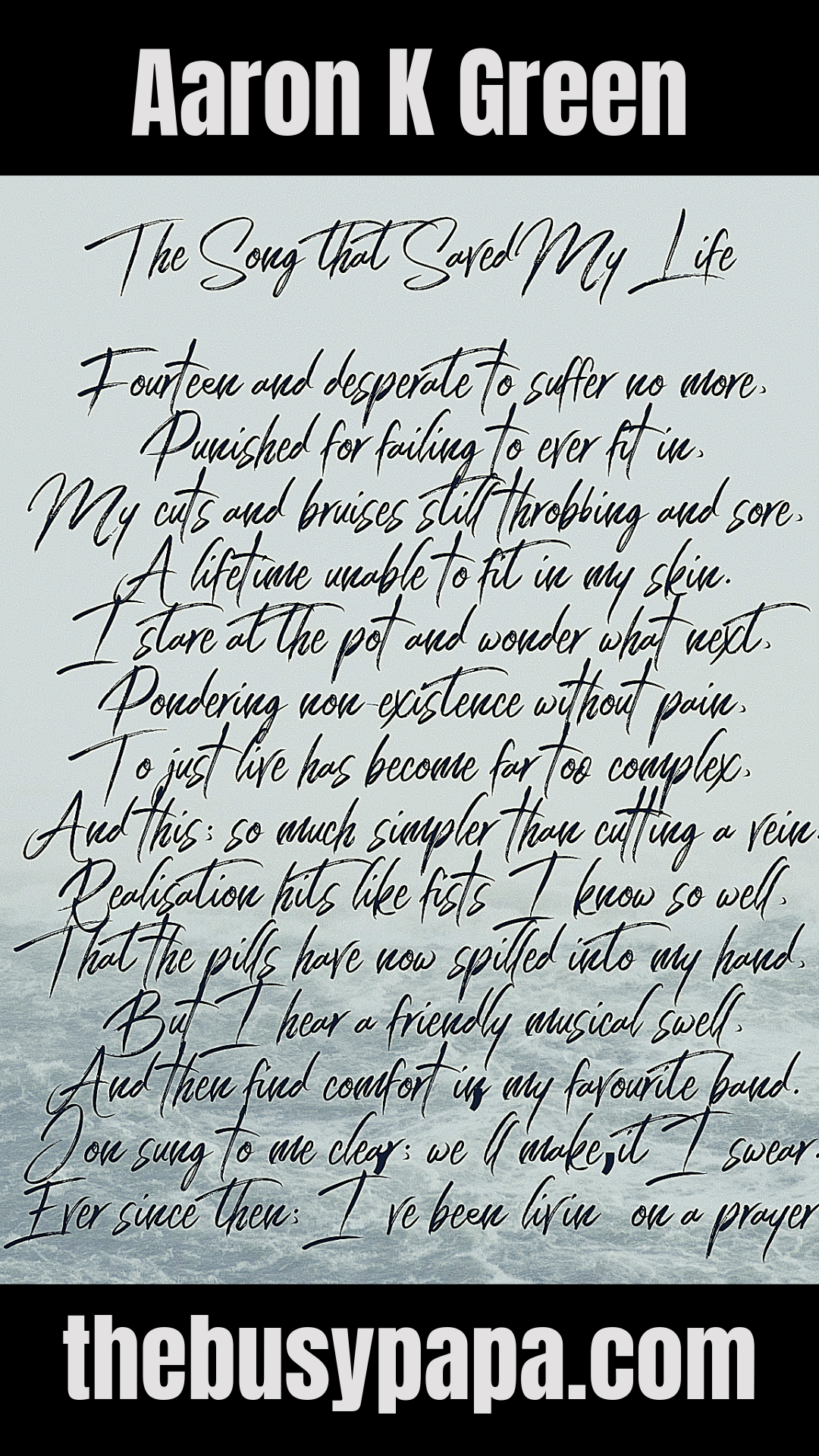
As an adult, I have seen male colleagues talk about dominating or raping the competition as synonyms for success. I’ve been belittled for calling this out. I could name much more. However, my point is that this attitude is prevalent in culture and it raises and rewards some men whilst lowering on trampling on others.
Not only does toxic masculinity devalue men who fail to conform but it also undermines positive feminine traits (in men and women), puts the genders in opposition and establishes an attitude of male dominance that many use as justification for sexism, bigotry and misogyny. At its core, it puts one gender ahead of the other.
Screw that.
From my personal perspective, toxic masculinity is a culturally backward way of looking at gender roles that damages the development of boys and allows for conflicted and damaged men that struggle to function acceptably in modern society and I believe we are all guilty of it.
The Busy Papa

Also known as Aaron, The Busy Papa focuses on lifestyle, parenting and personal wellbeing content. He has two decades experience in creative writing (including several published poems) and strongly dislikes (though tolerates) tomatoes.
Toxic masculinity is so damaging to men everywhere. Men commit more suicide than women, and many men still feel they cannot talk about their feelings. As an ex psychiatric nurse that is so true. Talking really does help depression.
It is and it is so heartbreaking 🙁
This is such a talking point now and it’s great to see especially as I’m a mum to two boys and their mental well being is so important to me.
Hopefully their generation is the last that struggles this way. It is horrific that it has been like this for so very long.
I really hate the term ‘man up’ it’s so important men express and share all their feelings. Male suicide is at it’s peek and we need to loose these preconceived ideal of masculinity.